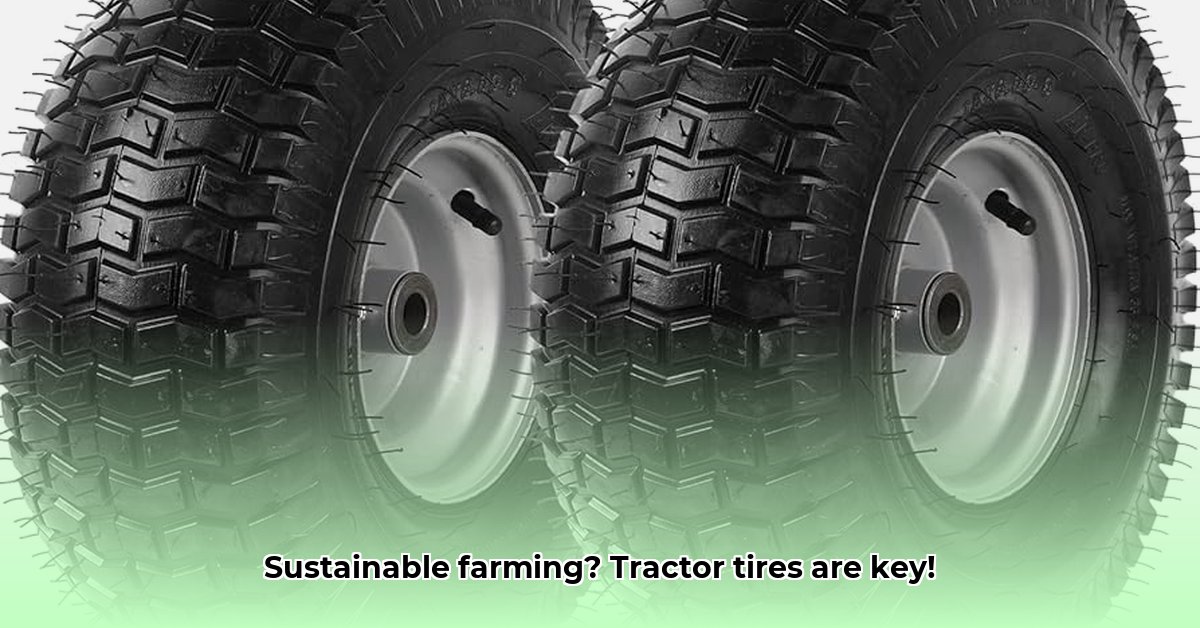
The Environmental Footprint of Tractor Tires: A Hidden Cost
Farmers are acutely aware of their impact on the land. Yet, the environmental footprint of seemingly mundane items like tractor tires (llantas para tractor) is often overlooked. The production, use, and disposal of these massive tires contribute significantly to environmental challenges, from resource depletion to landfill waste. This isn't just about "going green"; it's about economic efficiency and long-term sustainability for your farm. For more on proper tire inflation, see this helpful resource: Tire Pressure Guide.
The production of a single tractor tire requires significant energy—fueling its creation from raw materials. Furthermore, the manufacturing process itself generates substantial waste and emissions. Then, after years of service, these enormous tires reach the end of their lifespan. Often destined for landfills, they contribute to pollution and environmental degradation. This hidden cost affects both the environment and your farm's bottom line. But the question remains: How significant is this impact, and what can be done?
Making Sustainable Choices: Selecting Eco-Friendly Llantas para Tractor
Choosing environmentally responsible llantas para tractor demands a shift in perspective beyond the initial purchase price. It's about considering the entire lifecycle of the tire—from creation to disposal. Let's examine key factors in making a greener choice.
1. Prioritizing Longevity: The Extended-Life Advantage: Investing in high-quality, long-lasting tires ultimately proves cost-effective and environmentally sound. A more expensive tire with a substantially longer lifespan will prove cheaper in the long run, reducing the frequency of replacements, and minimizing both waste and environmental impact. Proper maintenance, including regular inflation checks and careful driving, is crucial to maximizing tire longevity.
2. Material Innovation: Beyond Traditional Rubber: The tire industry is actively exploring innovative materials to enhance sustainability. The incorporation of recycled rubber into new tires reduces the demand for virgin materials. Research into bio-based alternatives, derived from renewable resources, offers a promising avenue for lessening environmental impact. While still in development, these materials represent a significant step toward a greener future.
3. Responsible Recycling: Closing the Loop: The proper disposal of worn tires is paramount. Farmers should actively seek out manufacturers and distributors with established tire recycling programs. Proper recycling prevents tires from ending up in landfills, and often enables the repurposing of rubber into new products—creating a circular economy that minimizes waste. Supporting these initiatives reinforces sustainable practices within the industry.
4. Fuel Efficiency: A Significant, Often Overlooked, Factor: Properly inflated, well-maintained tires significantly improve fuel efficiency in tractors. This translates to reduced fuel consumption, lower greenhouse gas emissions, and direct cost savings. It's a clear win-win proposition for both the environment and your farm's budget. Can you quantify the potential fuel savings with better tire maintenance? Studies show a properly inflated tire can improve fuel efficiency by as much as 10%.
Total Cost of Ownership: The Bigger Picture
Before purchasing new llantas para tractor, consider the total cost of ownership. This encompasses not only the initial price but also the tire's lifespan, fuel efficiency, and its environmental impact across its lifecycle. Though a sustainable tire may command a higher initial price, it can easily offset this cost over its lifetime, through reduced replacements and lower fuel bills. This represents a long-term investment in both the farm's financial health and the planet's well-being. Isn’t a longer-lasting tire a far more economical option in the long run?
The Ongoing Journey to Sustainable Tractor Tires
Despite encouraging progress, the path to completely sustainable tractor tires remains a work in progress. Challenges include the lack of standardized environmental impact information for tires, making informed choices difficult. The development of clear, standardized labels similar to those used for appliances could significantly improve transparency and consumer decision-making.
A Collaborative Effort: Towards Greener Farming
The transition to sustainable agriculture demands collaboration among all stakeholders: farmers themselves, tire manufacturers and distributors, and government policymakers. Incentivizing sustainable practices, creating clear environmental standards, and investing in improved recycling infrastructure are crucial steps. The encouraging aspect is the rising consumer demand for sustainable options, directly driving manufacturers towards innovation and the development of eco-friendly products.
Conclusion: One Sustainable Tire at a Time
Farming intrinsically involves nurturing life, both on the farm and on the planet. Selecting sustainable llantas para tractor reflects a commitment to this broader vision. While it might seem a small action on an individual level, the collective impact of choosing sustainable tires represents a significant contribution towards a healthier, more sustainable future for agriculture. The time for sustainable change is now.